
Drainage & Water Management
Drainage problems are rarely isolated surface issues. Standing water, soggy lawns, spring saturation, roof runoff, poor grading, and underground drainage paths all influence how water moves across a property. Sewer Doctors coordinates drainage and water-management solutions around the source, collection path, discharge route, buried utilities, rear-yard access, and restoration requirements.
The goal is not simply to install a drain. It is to build a controlled system that moves water without creating a new problem elsewhere.
What Drainage & Water Management Means
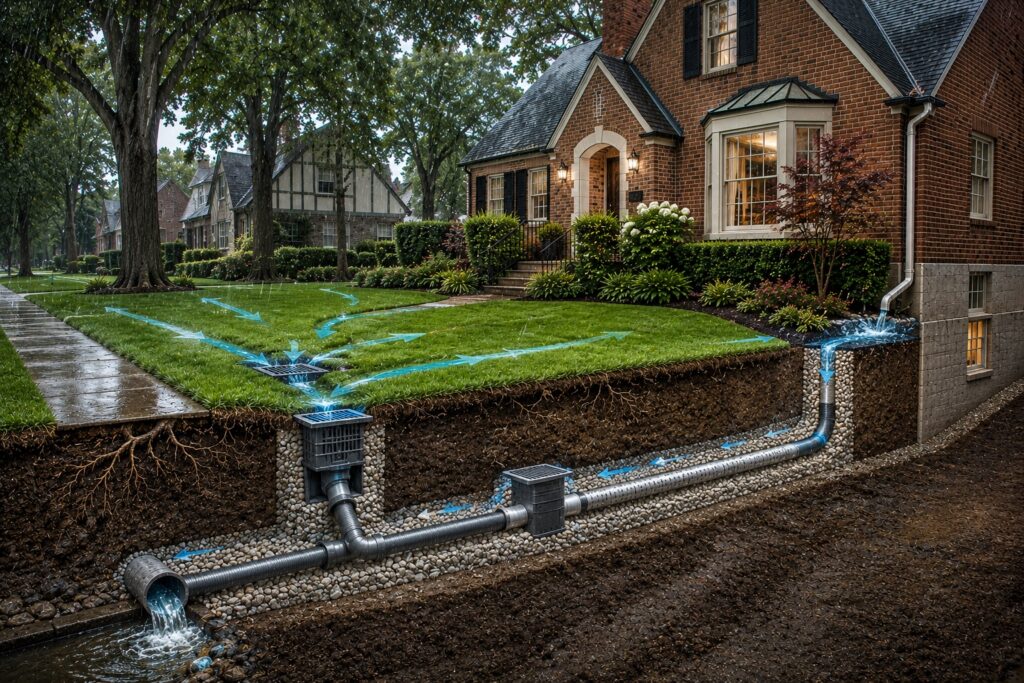
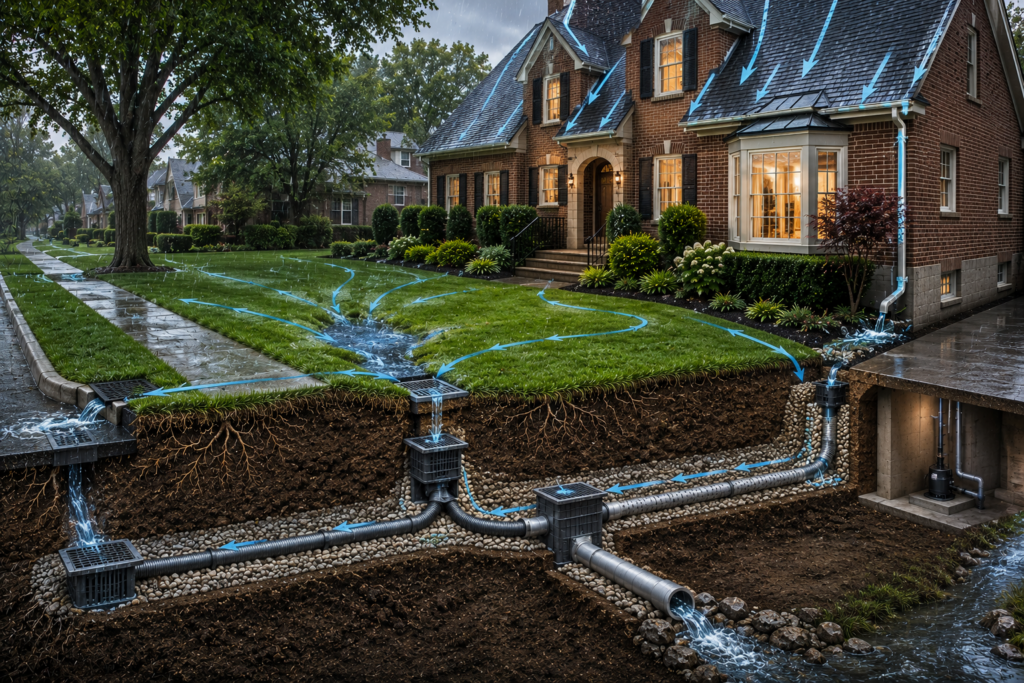
A successful drainage plan identifies where water comes from, where it collects, whether the problem is surface water or subsurface saturation, how the water can travel through the property, and where it can discharge. The right solution may combine grading, catch basins, solid pipe, perforated French-drain pipe, downspout routing, or an outdoor sump system.
Drainage should be coordinated as part of the complete property system – not treated as a one-product sale.
Signs Your Property May Have Drainage Problems
Drainage problems often become most visible during spring snowmelt, repeated rainfall, or prolonged soil saturation. These conditions can reveal low areas, blocked routes, grading conflicts, and subsurface water movement that may not be obvious during dry weather.
Standing Water
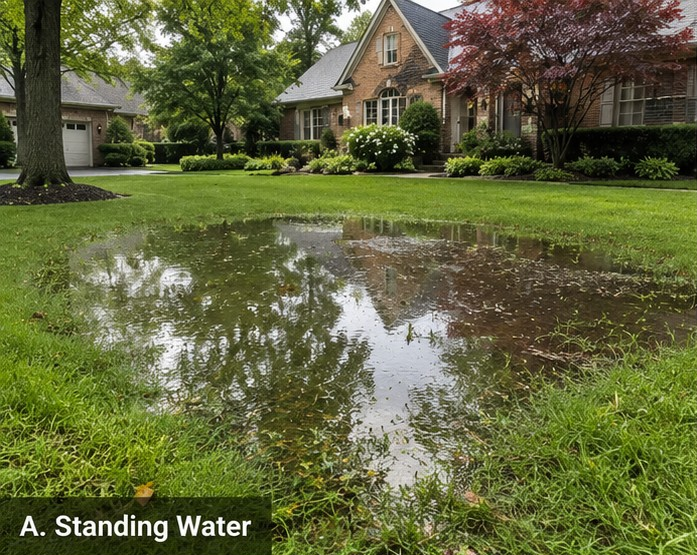
Water remaining after rainfall may indicate a low area, restricted outlet, compacted soil, or a system that cannot move surface water away efficiently.
Soft Or Soggy Lawn Areas
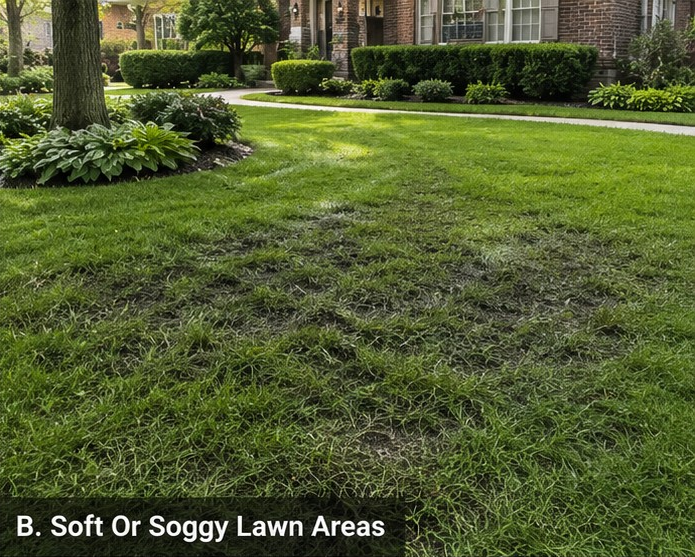
Soft, spongy, or saturated lawn areas may indicate trapped subsurface water, poor soil infiltration, or a missing collection and discharge route.
Water Near The Foundation
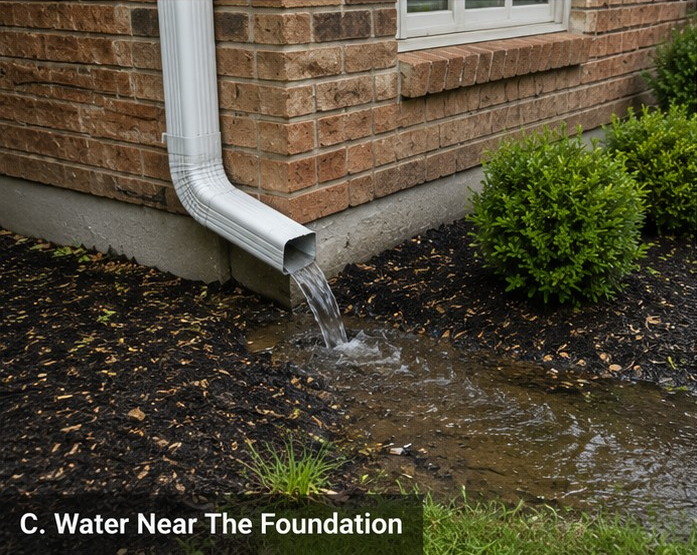
Roof runoff, negative grade, or saturated soil near the foundation can keep moisture concentrated around the home instead of moving it toward a controlled outlet.
Erosion Or Washout
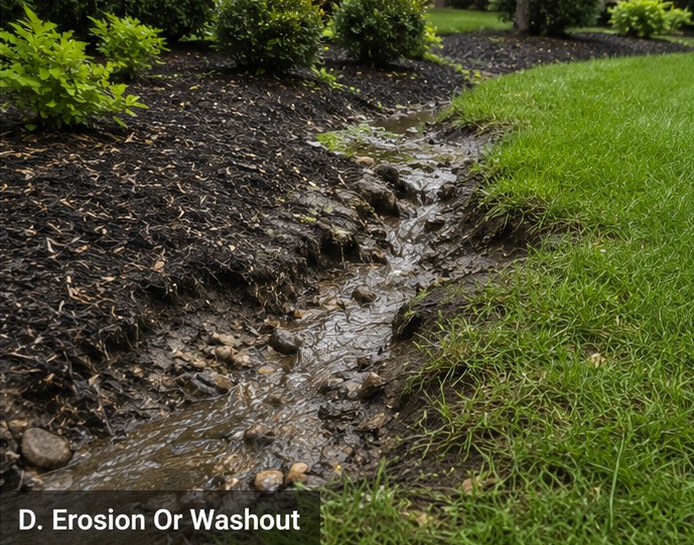
Exposed soil, moving mulch, ruts, and washed-out areas show where water is traveling too quickly or without a stable route.
Common Causes Of Drainage Problems
Most residential drainage problems are not caused by one failed product. They develop when grading, roof runoff, soil conditions, old piping, seasonal saturation, and discharge limitations work against one another.
Poor Grading
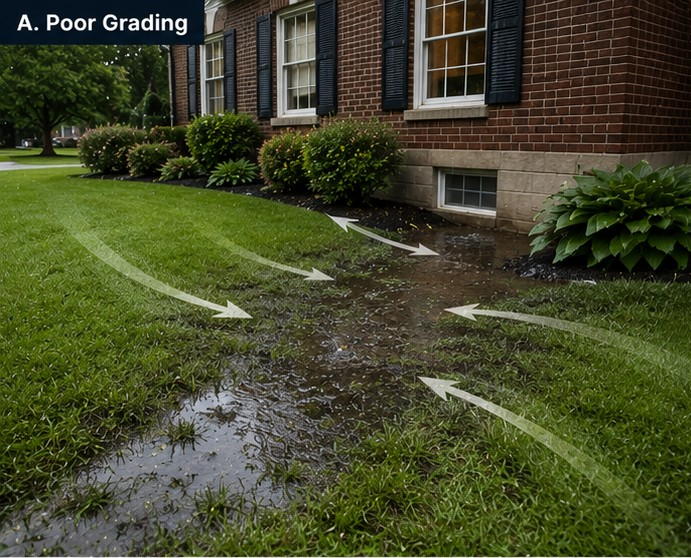
Improper grade can direct runoff toward the home, trap water in rear-yard low spots, or prevent collected water from reaching an outlet.
Downspout Discharge Problems
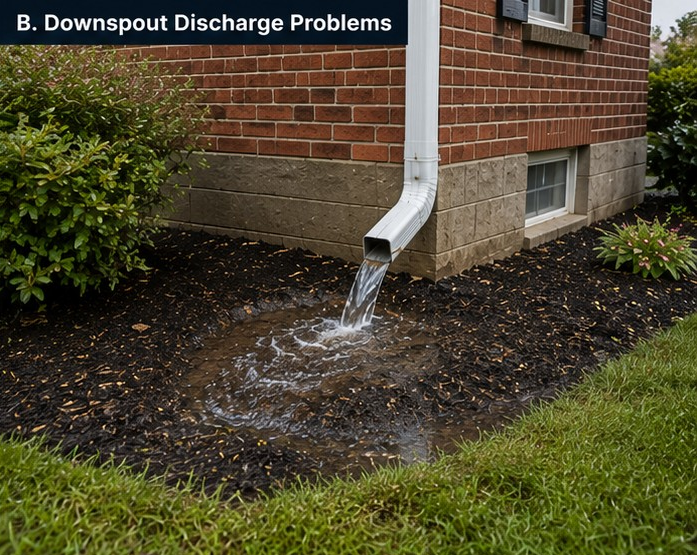
Roof runoff can overload mulch beds, foundation areas, and low lawn sections when downspouts terminate too close to the home or discharge without a controlled route.
Soil Saturation
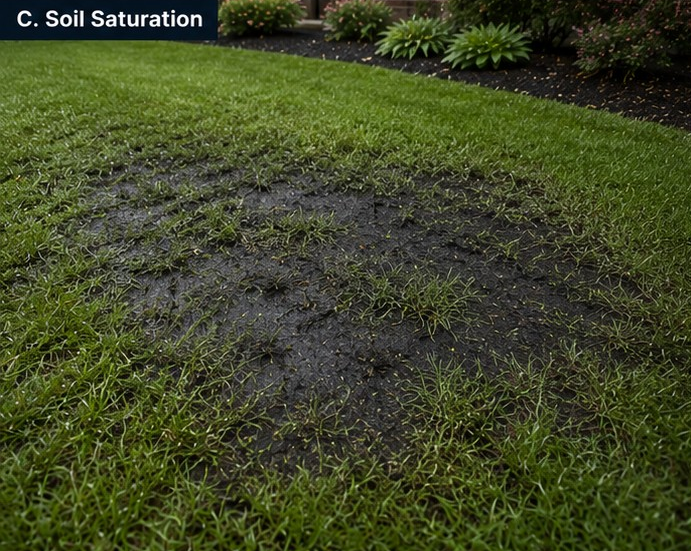
Compacted or slow-draining soil can remain saturated after the surface looks dry, allowing water to collect below the lawn and migrate through disturbed soil.
Blocked Or Broken Drainage Paths
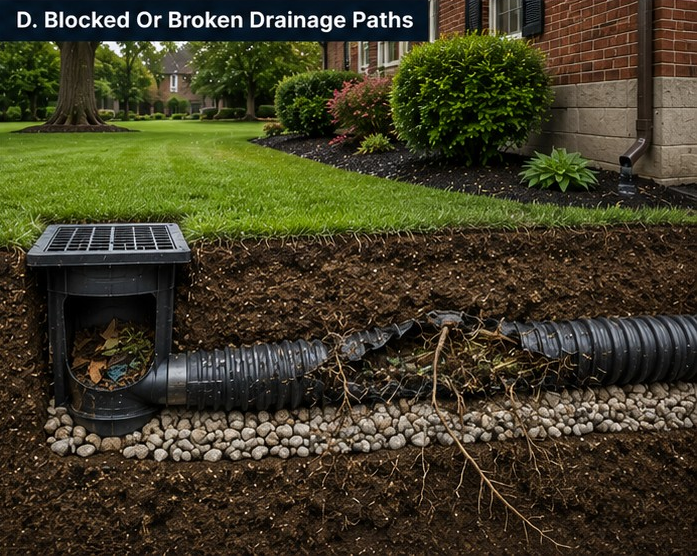
Crushed pipe, buried outlets, clogged yard drains, failed fittings, root-affected lines, and poorly built systems can interrupt the route to discharge.
Why Drainage Planning Matters
Drainage work should begin with water behavior, not assumptions. A French drain, catch basin, grading correction, downspout line, or sump system only works when it matches the actual source, volume, collection point, route, and outlet of the problem.
Collecting water without a workable discharge route only moves the problem into a pipe.

Before We Recommend A System, We Review:
Drainage Solutions We Coordinate
The correct plan may use one method or several connected methods. Sewer Doctors coordinates surface collection, subsurface drainage, solid discharge routing, grading, and pumped systems so each component supports the same water-management objective.
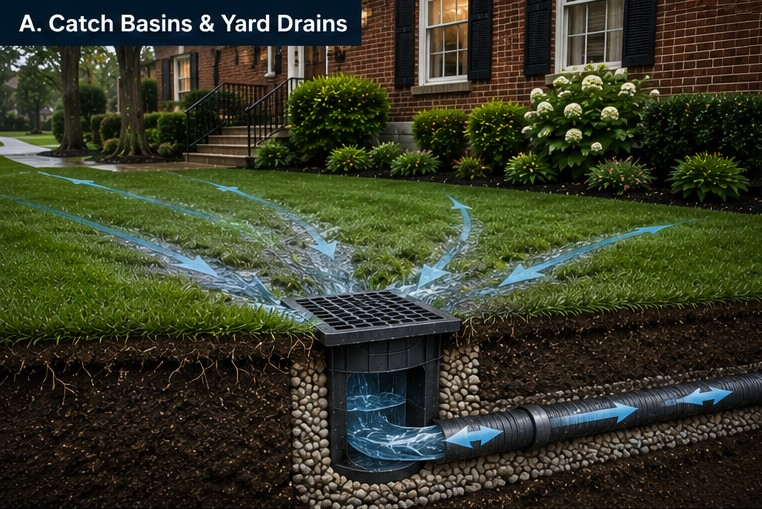
Catch Basins & Yard Drains
Collect surface water from low areas, patios, driveway transitions, and concentrated runoff points, then route it through solid pipe.
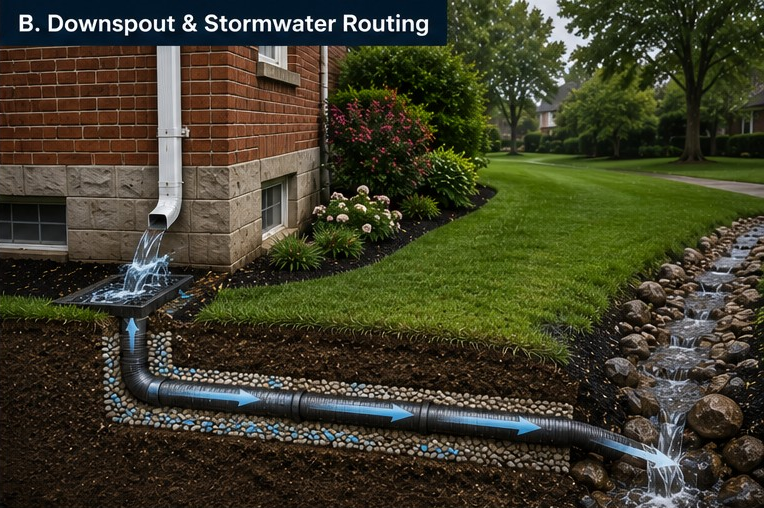
Downspout & Stormwater Routing
Carry roof runoff away from the foundation and saturated lawn areas through cleanable, controlled solid-pipe routes.
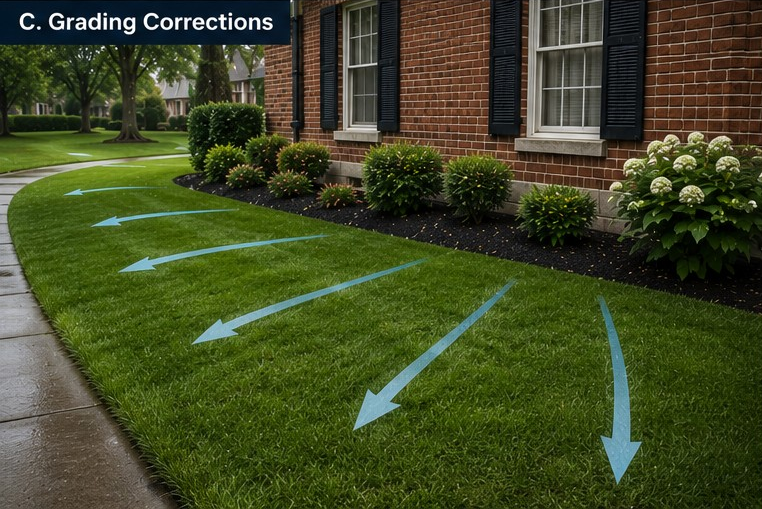
Grading Corrections
Reshape selected areas so surface water moves away from structures and toward planned collection or discharge points.
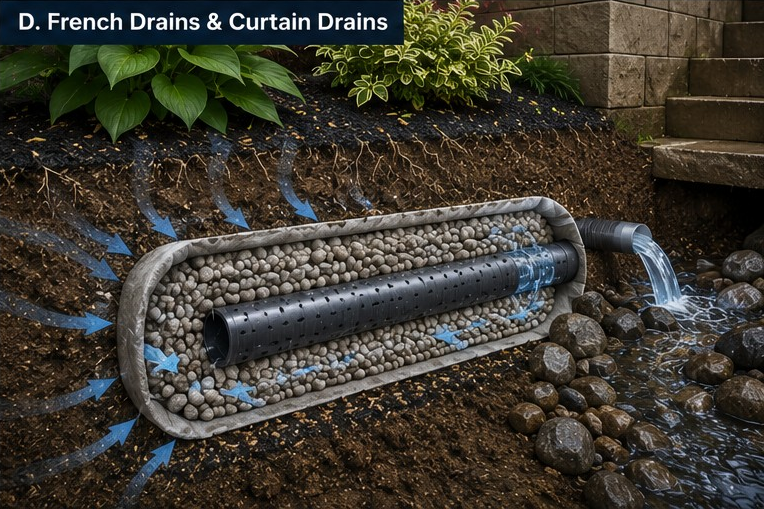
French Drains & Curtain Drains
Intercept subsurface saturation with a stone-and-perforated-pipe system designed around soil separation, elevation, and a workable outlet.
How A Modern Residential French Drain Works
Homeowners often use “French drain” to describe almost any rear-yard drainage system, but a modern French drain is specifically designed to collect subsurface water. The trench is lined with nonwoven geotextile, filled with clean drainage stone, and built around perforated pipe placed low in the stone envelope so water can enter and move toward a planned outlet.
Perforated and solid pipe do different jobs. Perforated pipe collects water along the trench; solid pipe moves concentrated water from catch basins, downspouts, or transfer sections without releasing it back into the soil.
A Complete System May Include:
Where Does The Collected Water Go?
Every drainage system needs a workable destination. Collecting water without deciding where it will discharge only relocates the problem. The final route depends on property elevations, available fall, outlet conditions, buried infrastructure, and local requirements.
Gravity Discharge
When the property has enough natural fall, collected water can travel through solid pipe toward an appropriate lower outlet.
Controlled Transfer & Discharge
French drains, catch basins, downspouts, and surface drains can connect to solid pipe so water moves through the property without resaturating the collection trench.
Exterior Sump System
When the rear yard is too flat for dependable gravity flow, an outdoor basin and pump can lift collected water and send it toward a more appropriate discharge location.
Our Coordinated Drainage & Water Management Process
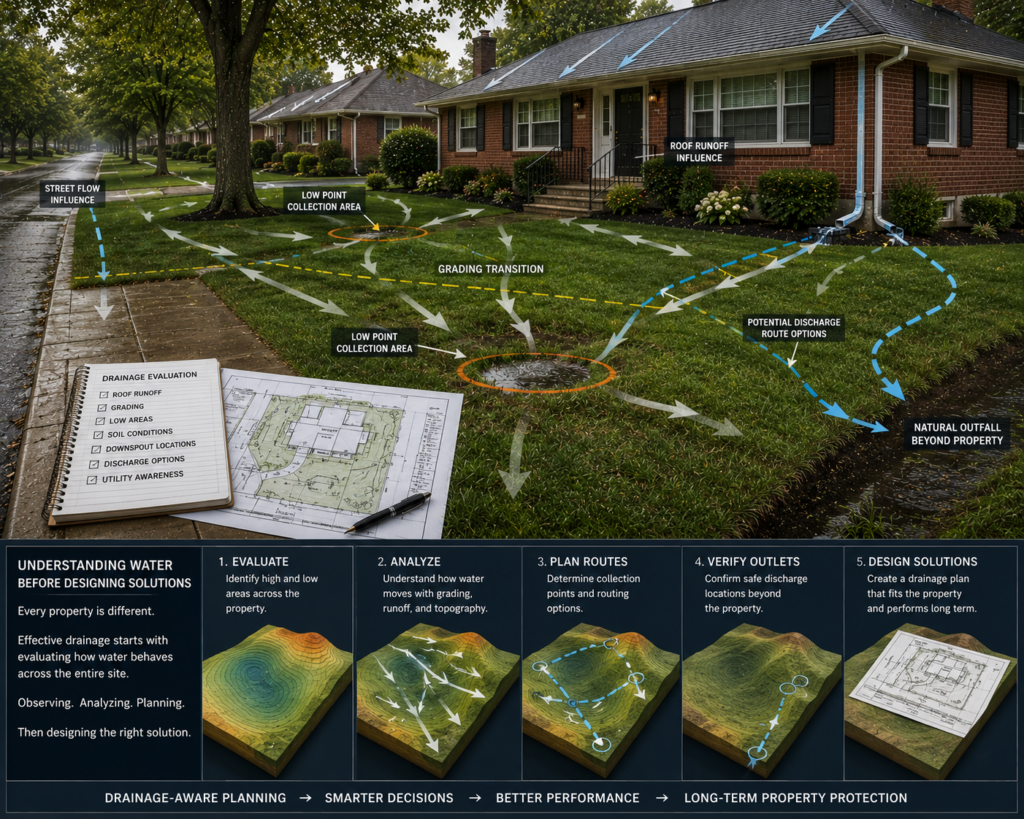
Every drainage project begins with understanding how water behaves – not with choosing a product. We evaluate the property, investigate surface and subsurface conditions, coordinate utilities and discharge options, install the appropriate system, and restore the affected area with long-term performance in mind.

Evaluate
Review standing water, saturated soil, grading, roof runoff, downspouts, existing drainage systems, property access, and homeowner concerns.
Investigate
Identify the water source, collection points, surface routes, subsurface saturation, low elevations, seasonal patterns, and available discharge opportunities.
Coordinate
Plan the drainage method, utility verification, hydro excavation, gravity or pumped discharge, equipment access, spoil handling, and restoration.
Install
Install the coordinated combination of French drains, catch basins, solid lines, downspout routing, grading corrections, or an outdoor sump system suited to the property.
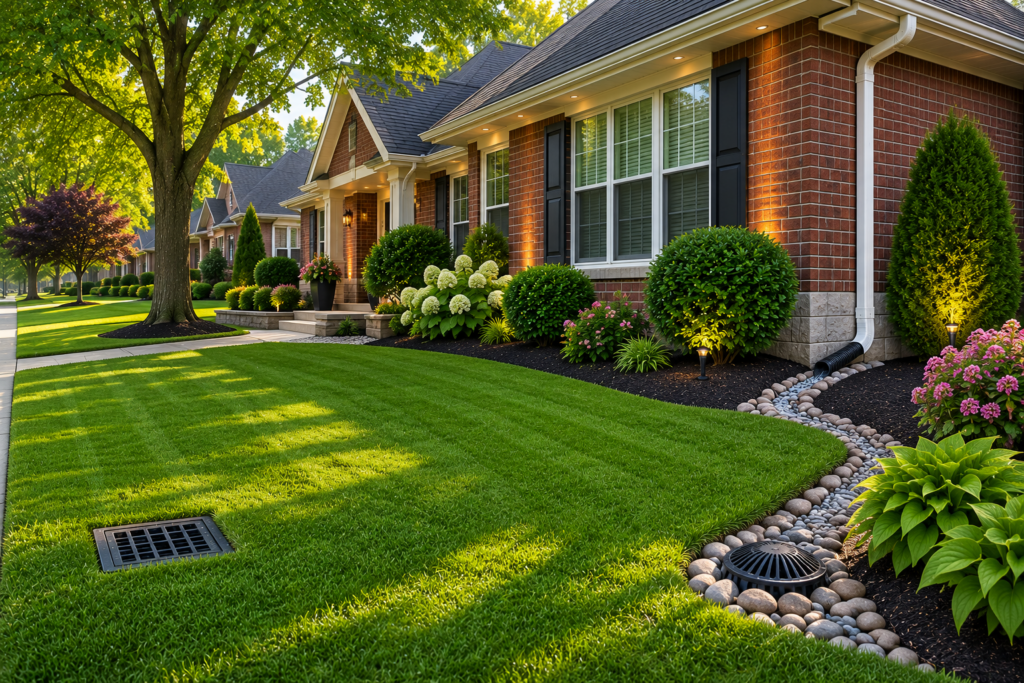
Restore
Remove excess spoil, stabilize disturbed areas, restore grade and lawn surfaces, clean the site, and verify that the discharge route functions as planned.
Utility-Safe Drainage Planning
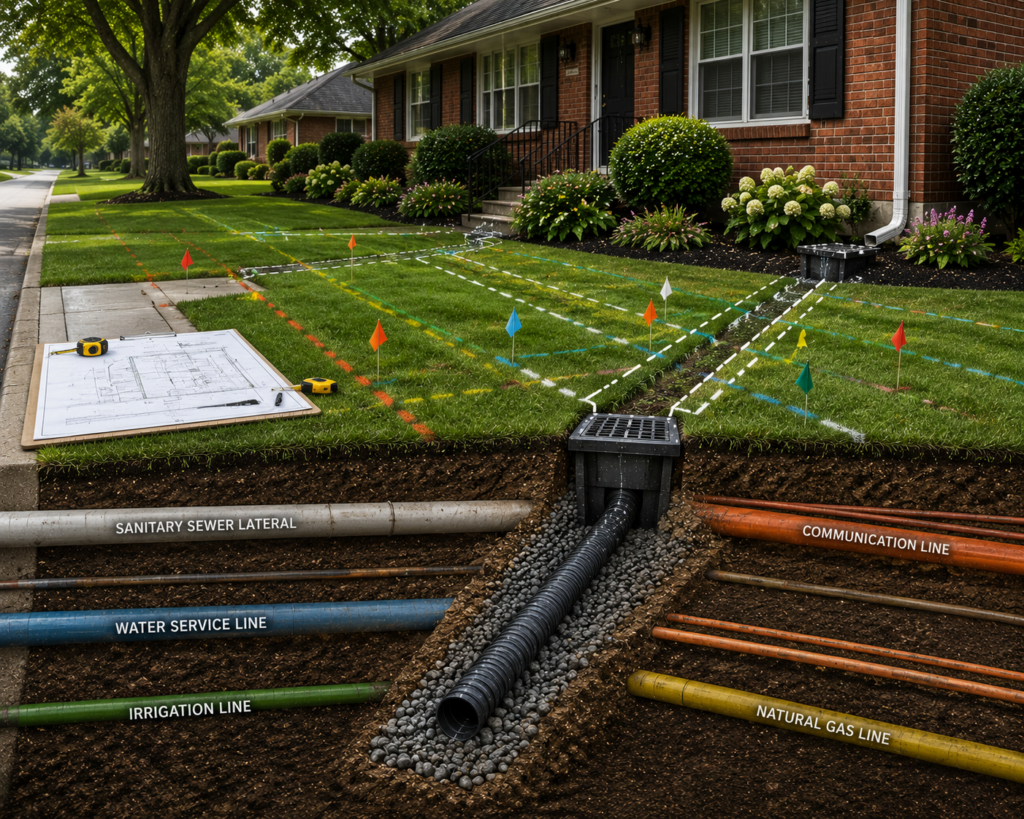
Drainage routes often cross sewer laterals, water services, electrical, irrigation, gas, communication, and fiber lines. Utility locating establishes the known corridor, but critical crossings may still require controlled exposure before mechanical trenching. Sewer Doctors uses hydro excavation where appropriate to verify buried infrastructure, reduce guesswork, and protect expensive underground systems.
In selected areas, vacuum excavation can remove soil from tight utility zones while the excavated material is hauled away and clean drainage stone is brought back as the system is built.
Rear-Yard Access Without Treating The Lawn Like A Work Zone
Most residential drainage work happens behind the home, where fence openings, mature landscaping, finished lawns, and narrow travel routes matter. Sewer Doctors plans access, equipment size, soil removal, stone delivery, and restoration around the property – not simply around the trench.
Protected Access
Controlled Excavation & Material Handling
Restoration-Conscious Completion
Why Homeowners Choose Sewer Doctors For Drainage Work
Drainage work requires more than installing pipe. The source of the water, the outlet, buried utilities, rear-yard access, soil handling, and finished restoration all have to be understood together.
Property-First Drainage Planning
Water is evaluated as part of the whole property system, including grading, roof runoff, soil saturation, underground utilities, landscaping, and future infrastructure plans.
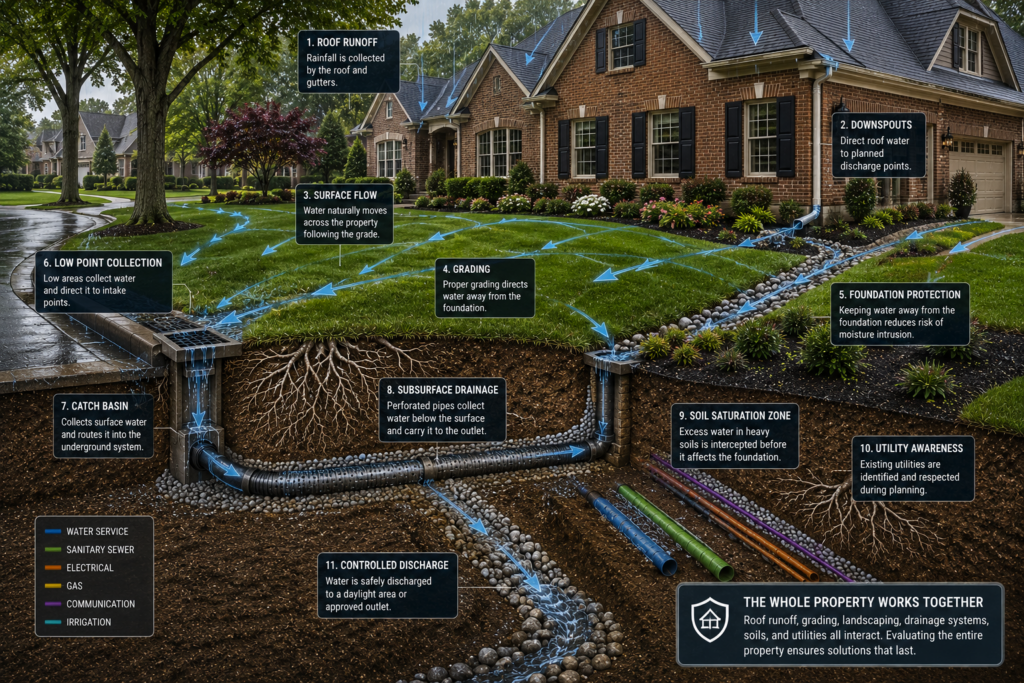
Utility-Safe Execution
Locating, hydro excavation, smaller equipment, and controlled trenching improve visibility and reduce risk in crowded rear-yard utility corridors.
Restoration-Conscious Work
Ground mats, spoil removal, stone replacement, grading, lawn recovery, and cleanup are treated as part of the drainage system – not an afterthought.
Drainage & Water Management Questions
Quick answers about standing water, French drains, catch basins, discharge routes, outdoor sump systems, utility protection, and rear-yard restoration.
What are signs of a drainage problem?
Standing water after rain, soft or soggy areas, erosion, moving mulch, water near the foundation, recurring wet low spots, and lawn areas that stay saturated longer than surrounding ground can all indicate a drainage problem.
Is a French drain always the right solution?
No. A French drain is designed primarily to collect subsurface water. Standing surface water may require a catch basin or yard drain, roof runoff may require downspout routing, and some properties need grading, solid discharge pipe, or a combination of methods.
What is the difference between a French drain and a yard drain?
A French drain collects water from saturated soil through a stone-filled trench and perforated pipe. A yard drain collects visible surface water through a grate or catch basin and moves it through solid pipe. Strong systems may use both.
Where does the collected water discharge?
The outlet depends on property elevation, available fall, existing storm infrastructure, neighboring conditions, and local requirements. Water may move by gravity to an appropriate outlet or be lifted by an outdoor sump system when natural fall is insufficient.
What happens when the yard does not have enough natural slope?
When gravity cannot move water reliably, an exterior basin and pump may collect water at the low point and lift it to a more suitable discharge route. The pump, electrical supply, discharge line, freeze protection, and maintenance access must be planned together.
Can drainage work damage my lawn or landscaping?
Drainage work requires excavation, but impact can be controlled. Ground mats, smaller equipment, planned travel routes, hydro excavation, vacuum spoil removal, organized staging, and restoration planning help reduce unnecessary lawn and landscape damage.
How are underground utilities protected during drainage work?
Utility markings establish known routes, and hydro excavation can be used to expose critical crossings before mechanical trenching. This improves visibility around sewer, water, gas, electric, irrigation, communication, and fiber infrastructure.
Can drainage work be coordinated with sewer or water-line replacement?
Yes. Drainage routes often interact with sewer and water trenches, foundation grades, backfill, and restoration. Coordinating them during one project can reduce repeated excavation and help the systems work together.
Why are drainage problems often worse during the spring?
Spring snowmelt, repeated rain, and saturated or partly frozen soil can expose low areas, blocked outlets, and slow-draining conditions that are less obvious during dry weather.
Request Drainage & Water Management Evaluation
If your property has standing water, soggy lawn areas, foundation drainage concerns, downspout problems, erosion, or recurring stormwater issues, request an evaluation so the property can be reviewed with drainage behavior, utility safety, and restoration in mind.