
Water Line Replacement
Residential water line replacement restores reliable service when aging, corrosion, restriction, leaks, or deteriorating materials affect the underground connection between the municipal system and the home. Sewer Doctors coordinates the municipal connection, curb shutoff, service route, utility conflicts, excavation, backfill, and restoration as one property-focused project.
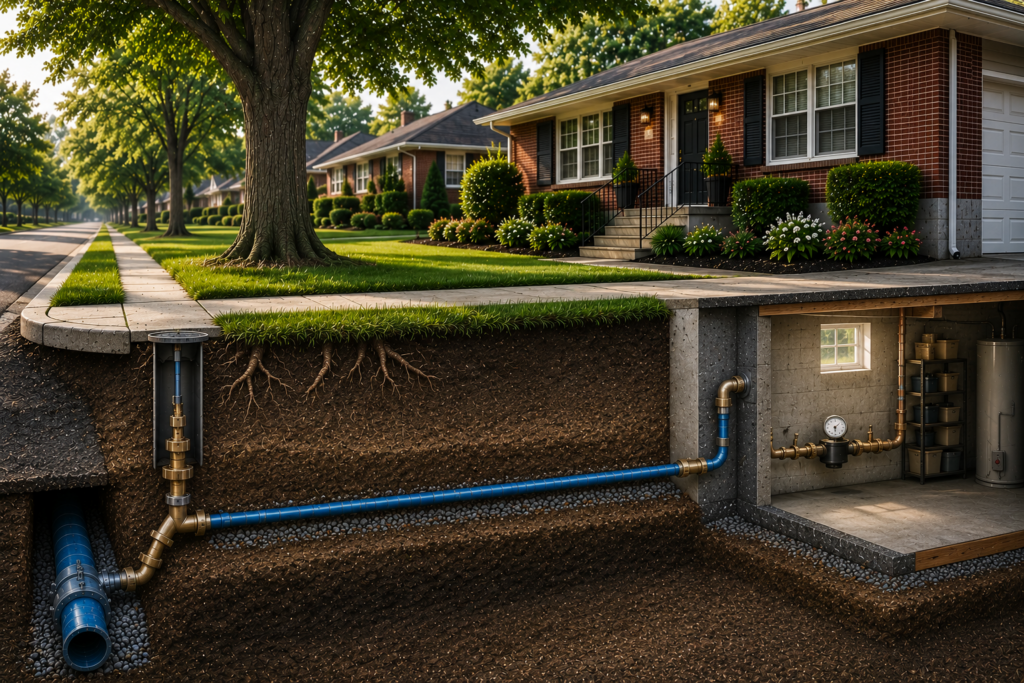
What Is A Residential Water Service Line?
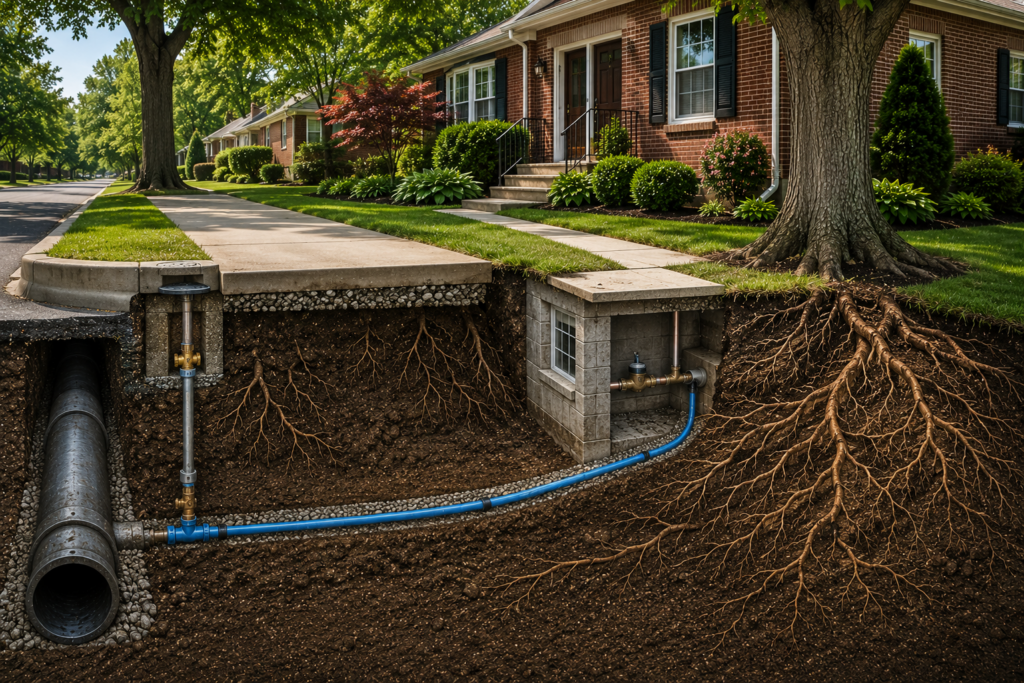
A residential water service line carries potable water from the municipal main to the home. The complete system may include the main connection or corporation stop, buried service pipe, curb stop and box, building entry, and meter-side transition. Exact ownership, materials, and connection requirements vary by municipality, which is why the entire route should be reviewed before replacement is recommended.

Signs Your Water Line May Need Replacement
Water service lines often show warning signs long before a complete failure. One symptom alone does not prove the buried service has failed, but repeated pressure, quality, leak, or yard conditions should be evaluated with the age, material, and route of the service.
Low Water Pressure
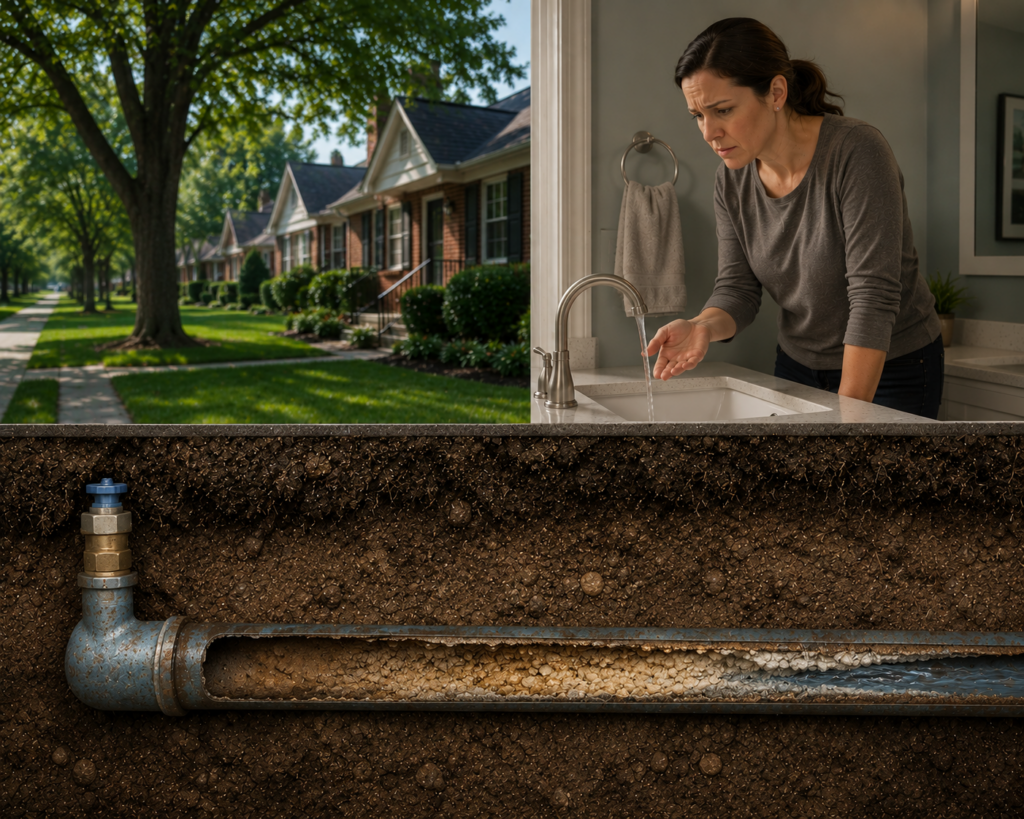
Gradual pressure loss throughout the home may indicate internal corrosion, mineral buildup, a restricted service, a partially closed shutoff, or another condition limiting flow.
Discolored Water
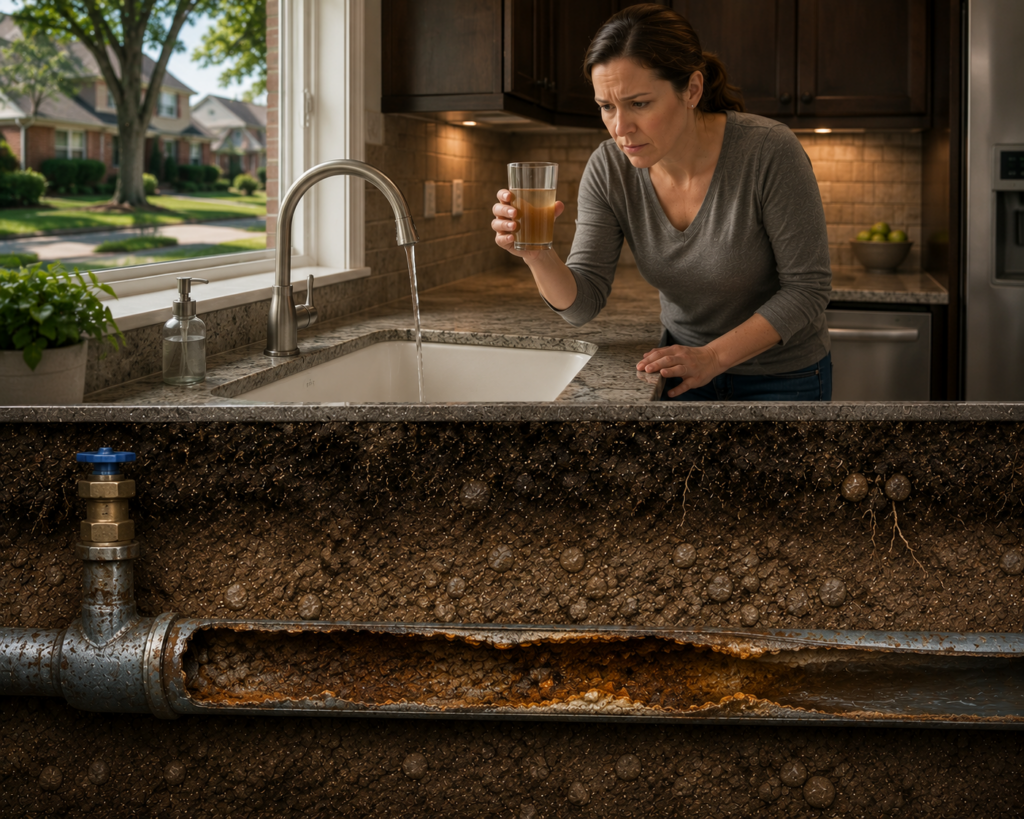
Brown, rust-colored, or recurring discoloration may indicate corrosion or deterioration in older metallic service materials. Interior plumbing and municipal conditions should also be considered before the buried service is blamed.
Unexpected Wet Areas
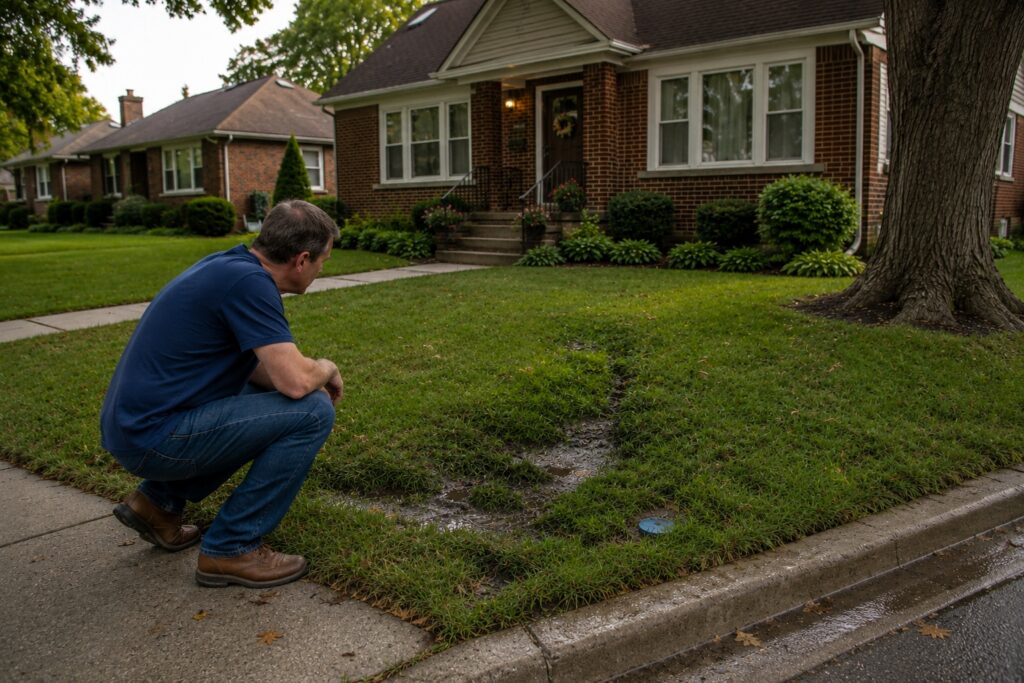
Persistent saturation, unusually green grass, soft soil, or unexplained water along the service route may indicate an underground leak. Drainage and irrigation conditions should also be ruled out.
Common Causes Of Residential Water Service Line Failure
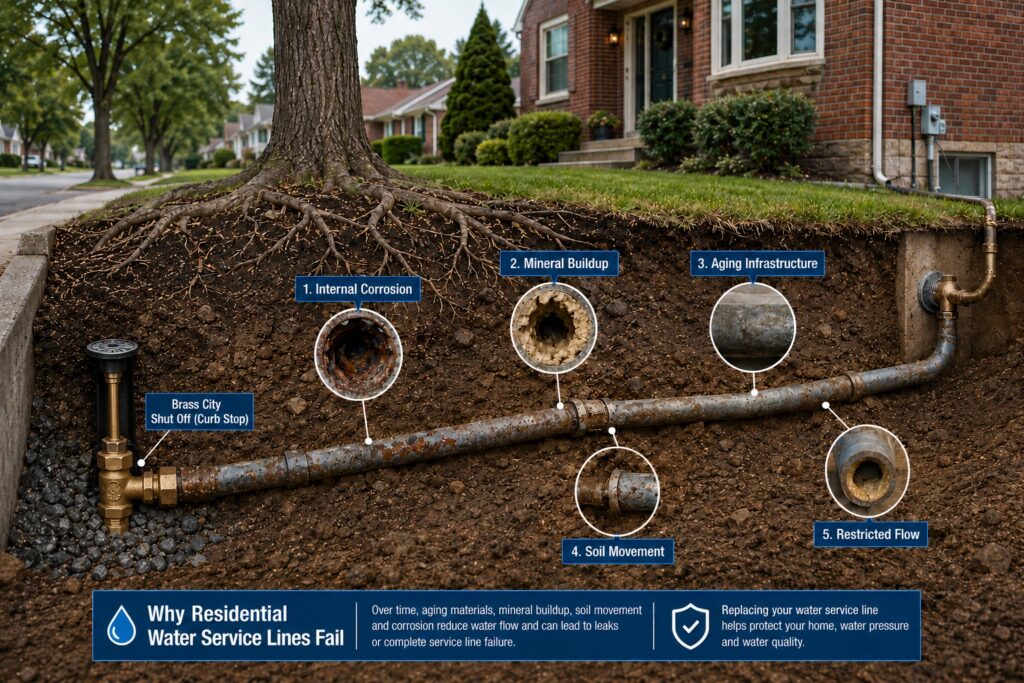
Residential water services often lose performance gradually as materials age, internal diameter narrows, soil conditions change, and fittings or connections weaken. Understanding the failure pattern helps distinguish a localized repair from a complete service-line problem.
Internal Corrosion
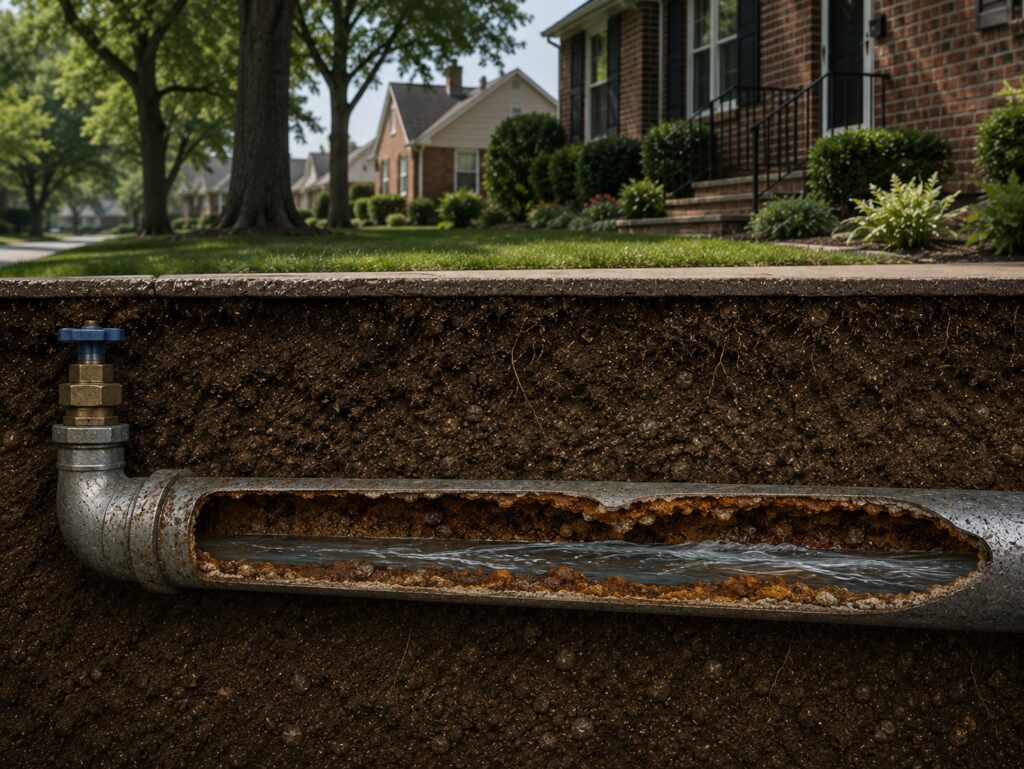
Galvanized and other metallic service lines can corrode from the inside, reducing usable diameter and weakening the line over time.
Mineral Buildup
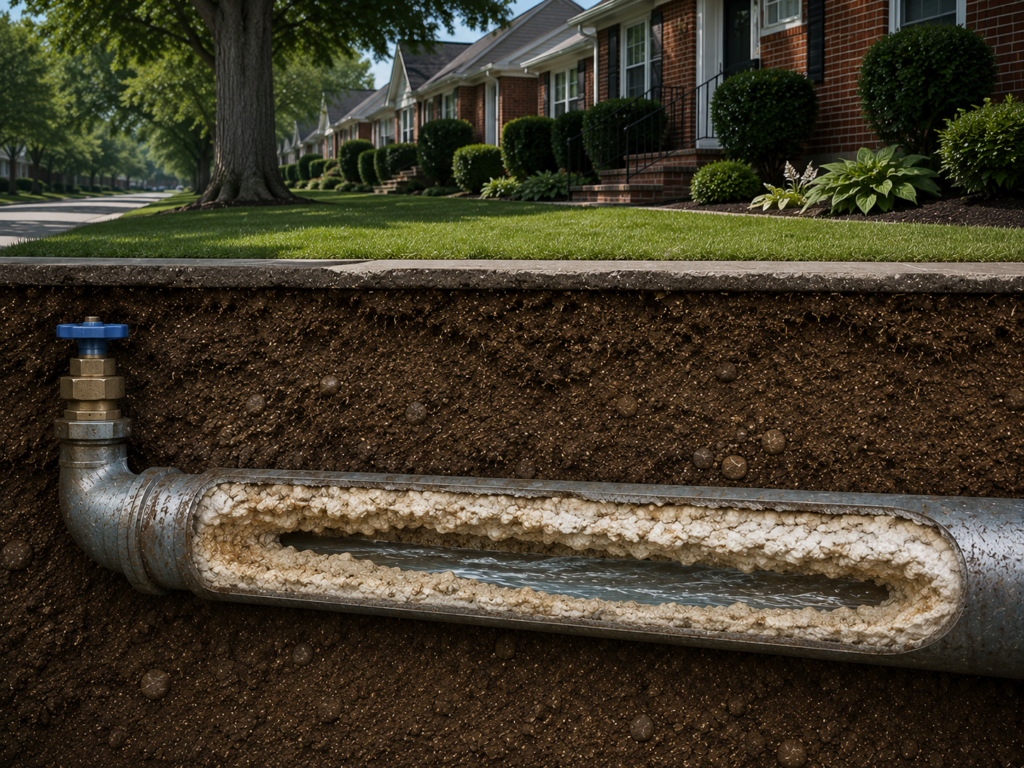
Mineral scale can narrow the inside of an aging service, reduce flow, and contribute to persistent pressure complaints.
Aging Infrastructure

Many Metro Detroit homes still rely on underground water services installed decades ago. Age alone does not prove failure, but it changes the repair-versus-replacement decision.
Deteriorating Materials
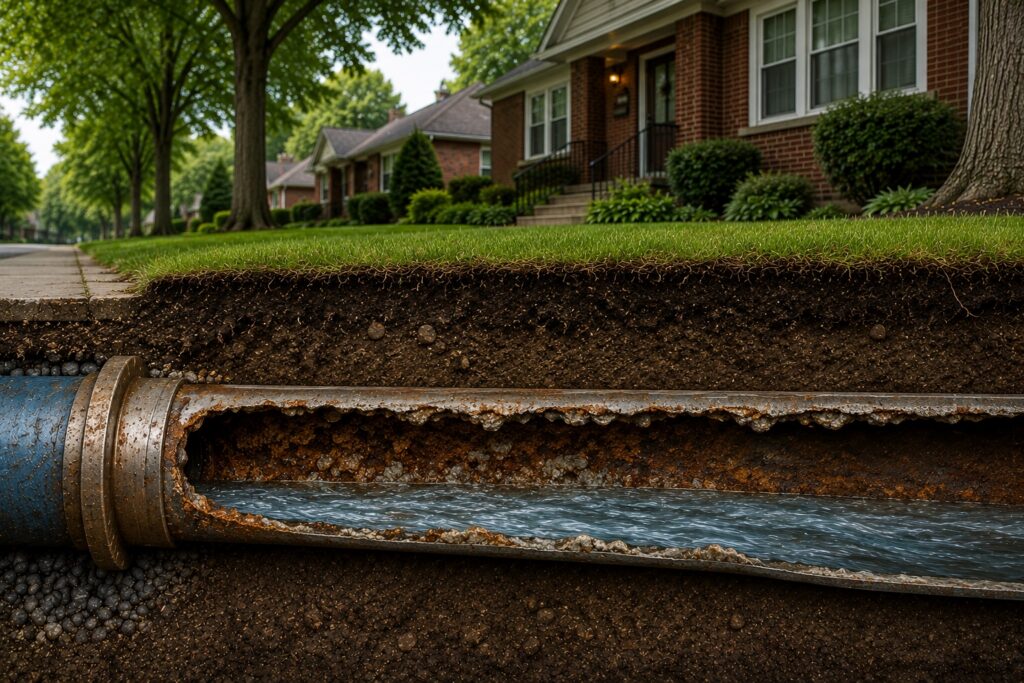
Soil conditions, corrosion, movement, freeze-thaw cycles, prior repairs, and material limitations can weaken fittings, joints, and pipe walls.
Why Repair Is Not Always The Best Long-Term Solution
A localized leak or damaged fitting may be repairable. When corrosion, restriction, multiple failures, deteriorating materials, or connection problems affect the service as a whole, another spot repair may not restore dependable flow or long-term reliability.
Replacement Is Often Recommended When:
Anyone can repair today’s leak. Planning the complete water service is what protects long-term reliability.
Our Coordinated Water Service Replacement Process
Every replacement begins with planning – not excavation. Sewer Doctors evaluates the existing service, verifies the route and municipal connection, coordinates utilities and shutoff requirements, installs and tests the new line, and restores the property with long-term performance in mind.

Evaluate
Review pressure complaints, leak history, water-quality concerns, existing service material, property access, and project objectives.
Investigate
Verify the likely route, curb stop, depth, material, municipal connection, building entry, utility conflicts, and restoration conditions.
Coordinate
Plan utility locating, municipal requirements, shutoff and inspection timing, hydro excavation where appropriate, access, material handling, and restoration.
Replace
Expose or establish the approved municipal connection, install the new service at the required depth and separation, coordinate the home entry, and complete testing and inspection.
Restore
Backfill with suitable material, compact in controlled lifts, restore grade and drainage continuity, complete cleanup, and deliver the written restoration scope.
How The New Water Service Connects
A complete replacement must coordinate the public-side connection, private service route, shutoff access, home entry, and final verification as one system. Exact ownership, permitted materials, and connection procedures vary by municipality, so those requirements are confirmed before work begins.
Municipal Main Connection / Corporation Stop
Curb Stop & Accessible Shutoff
Service Route, Material & Building Entry
Testing, Inspection & Turn-On
Could The Sewer Line Be Coordinated At The Same Time?
If both underground services are aging, leaking, restricted, or located within the same access and restoration zone, evaluating them together may reduce duplicated mobilization, utility exposure, and property disruption. Coordination is not automatic: sewer and water have different routes, depths, separation, connection, permit, inspection, and restoration requirements.
Before Coordinating Both Services, We Review:
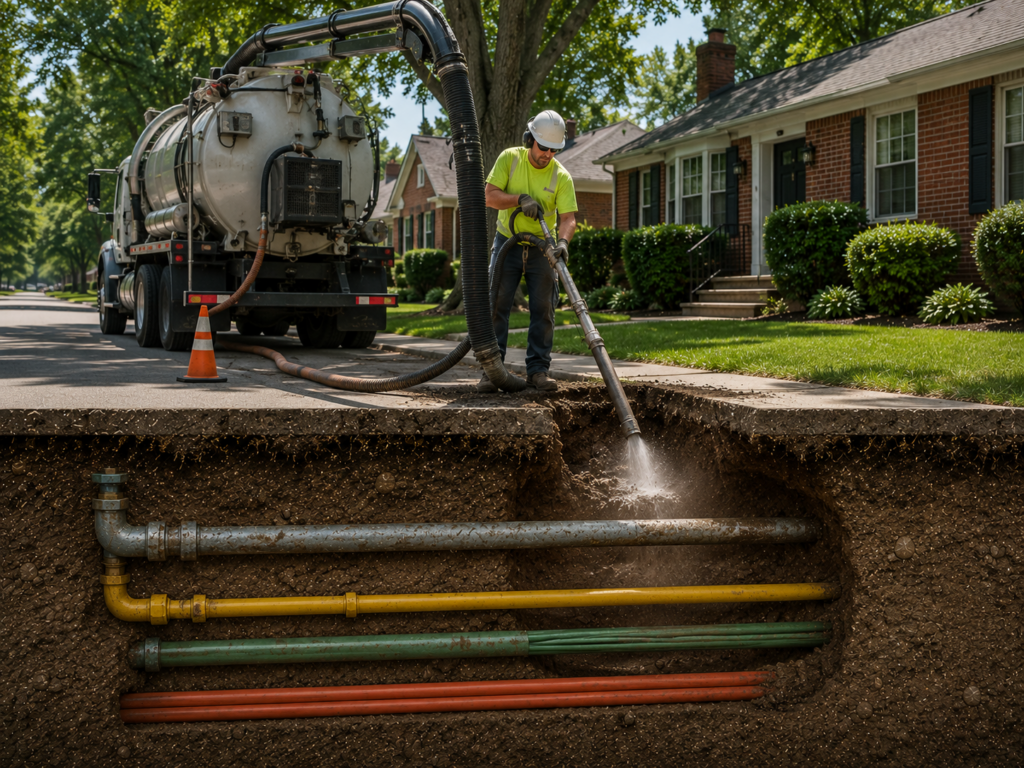
Utility Protection Through Hydro Excavation
Hydro excavation can expose buried utilities, the curb stop, connection areas, or critical crossings before mechanical digging continues. Used where appropriate, it improves field visibility, reduces blind excavation near sensitive infrastructure, and supports cleaner water-service replacement planning.
Property Protection & Restoration
Water line replacement affects more than the pipe. Access routes, equipment weight, material staging, spoil handling, trench bedding, backfill, compaction, grading, drainage, and the written restoration scope all influence how the property performs after the line is back in service.

Protected Access
Controlled Backfill
Premium Property Restoration
Why We Do Not Simply Put Dirt Back
Native clay and mixed trench spoil can hold water, compact poorly, and contribute to future settlement. When long-term property performance matters, Sewer Doctors may recommend removing unsuitable material and using compactable backfill installed in controlled lifts. The selected approach depends on soil conditions, municipal requirements, written scope, and restoration goals.

Why Homeowners Trust Sewer Doctors With Their Water Service
A water-service project affects municipal coordination, shutoff access, buried utilities, excavation, material handling, testing, backfill, and the finished property. Homeowners choose Sewer Doctors when those decisions need to be planned as one connected project – not treated as disconnected tasks.
Property-First Planning
The water service is evaluated in context with the home, driveway, lawn, trees, drainage, utilities, access, and long-term property function.
Utility-Safe Coordination
MISS DIG markings, private-utility awareness, hydro excavation, municipal requirements, and controlled exposure help reduce guesswork before digging.

Restoration-Conscious Work
Ground protection, spoil handling, backfill, compaction, grading, cleanup, and the written restoration scope are treated as part of the project – not an afterthought.

Water Line Replacement Questions
Quick answers about warning signs, pressure, repair versus replacement, municipal connections, curb-stop access, sewer coordination, project duration, property disruption, and exterior underground scope.
What Are Signs That The Underground Water Service May Be Failing?
Common warning signs include whole-house pressure loss, recurring underground leaks, persistent wet areas along the route, discolored water associated with older metallic service, and repeated repairs. No single symptom proves the buried service has failed, so interior plumbing, municipal supply, irrigation, and drainage conditions should also be considered.
Can An Old Water Service Reduce Pressure?
Yes. Internal corrosion, mineral buildup, undersized or restricted pipe, deteriorated fittings, and partially closed shutoff components can limit flow. Pressure problems can also originate inside the home or within the municipal system, so the complete path should be reviewed before replacement is recommended.
How Do I Know Whether The Line Needs Repair Or Full Replacement?
The decision depends on the location and extent of the defect, material, internal restriction, leak history, prior repairs, municipal connection, curb stop, route, building entry, utility conflicts, and how much of the service remains dependable. A localized fitting or short damaged area may be repairable; widespread deterioration may make complete replacement more responsible.
What Happens At The Municipal Water-Main Connection?
The private service connects to the municipal water main through a service tap or corporation stop. Depending on condition and local requirements, the connection may be exposed, inspected, reused, repaired, or replaced through an approved new tap or hot-tap procedure. Ownership, permitting, inspection, and approved materials vary by municipality.
What Is The Curb Stop And Why Does Access Matter?
The curb stop is an exterior shutoff used to isolate the private water service. The curb box should remain aligned and accessible for operation, inspection, and future maintenance. Its exact location, ownership, condition, and replacement responsibility vary by property and municipality.
Can The Sewer And Water Services Be Replaced At The Same Time?
Sometimes. If both services are aging or share the same access and restoration zone, evaluating them together may reduce duplicated mobilization and property disturbance. Sewer and water still have different routes, depths, separation, connection, permit, shutoff, and inspection requirements, so coordination must be property-specific.
How Long Does Water Line Replacement Take?
Project duration depends on permit and municipal scheduling, shutoff coordination, service length and depth, utility conflicts, connection conditions, access, testing, inspection, backfill, and the selected restoration scope. After evaluation, Sewer Doctors explains the expected sequence and the conditions most likely to affect scheduling.
Will Replacing My Water Line Damage The Yard?
Water-service replacement requires excavation, so some disturbance is unavoidable. Ground protection mats, controlled travel paths, organized staging, spoil management, suitable backfill, restoration planning, and defined access routes help reduce unnecessary damage. The written proposal should identify the included lawn, concrete, asphalt, grading, and landscape-restoration scope.
Can Discolored Water Mean The Service Line Is Failing?
It can, especially when older galvanized or metallic material is corroding. Discoloration may also come from interior plumbing, water-heater conditions, hydrant activity, or municipal supply changes. Persistent or recurring discoloration should be evaluated before the underground service is assumed to be the cause.
Does Sewer Doctors Perform Interior Plumbing?
This page is focused on exterior underground water-service evaluation, municipal connection coordination, utility exposure, excavation, backfill, and restoration planning. Interior fixtures, plumbing alterations, meter-side work, and building tie-ins should be handled or coordinated with the properly licensed trade when required.
Request Water Line Evaluation
Every property is different. Sewer Doctors evaluates service material, pressure and leak history, municipal connection, curb stop, route, utility conflicts, home entry, access, drainage, restoration goals, and long-term reliability before recommending a repair, replacement, or coordinated next step.